
A journey through Italy...
Italy, Designed Around How You Travel
Italy isn't simply a destination to see — it's a place experienced through pace, atmosphere, thoughtful planning, and choosing what matters most to you.
AN OPENING OBSERVATION
Some places reward seeing more. Italy rewards noticing more.
It’s easy to arrive with a map full of famous names—Rome, Florence, Venice, the Amalfi Coast—believing the best journey is the one that covers the most ground, but Italy has a way of slowing even the most carefully planned itinerary.
A lingering lunch in a quiet piazza. An unexpected conversation with a shop owner. A vineyard road that deserves an unplanned detour. These are often the moments remembered long after the landmarks begin to blur together.
We’ve found that the most memorable journeys aren’t defined by how many places they include, but by how naturally they unfold. For some travelers, that means spending a week exploring the hill towns of Tuscany. For others, it’s balancing the energy of Rome with a slower pace in Umbria, Puglia, or the shores of Lake Como.
Before choosing hotels, routes, or reservations, we start somewhere simpler: how do you hope Italy will feel?
That answer shapes everything that follows.
EXPLORING ITALY
Places We Return To
Some places stay with us long after we’ve returned home.
Not because they’re the most famous, but because every visit reveals something we hadn’t noticed before. These are a few of the places we return to—each offering its own rhythm, atmosphere, and way of experiencing Italy.
Rome
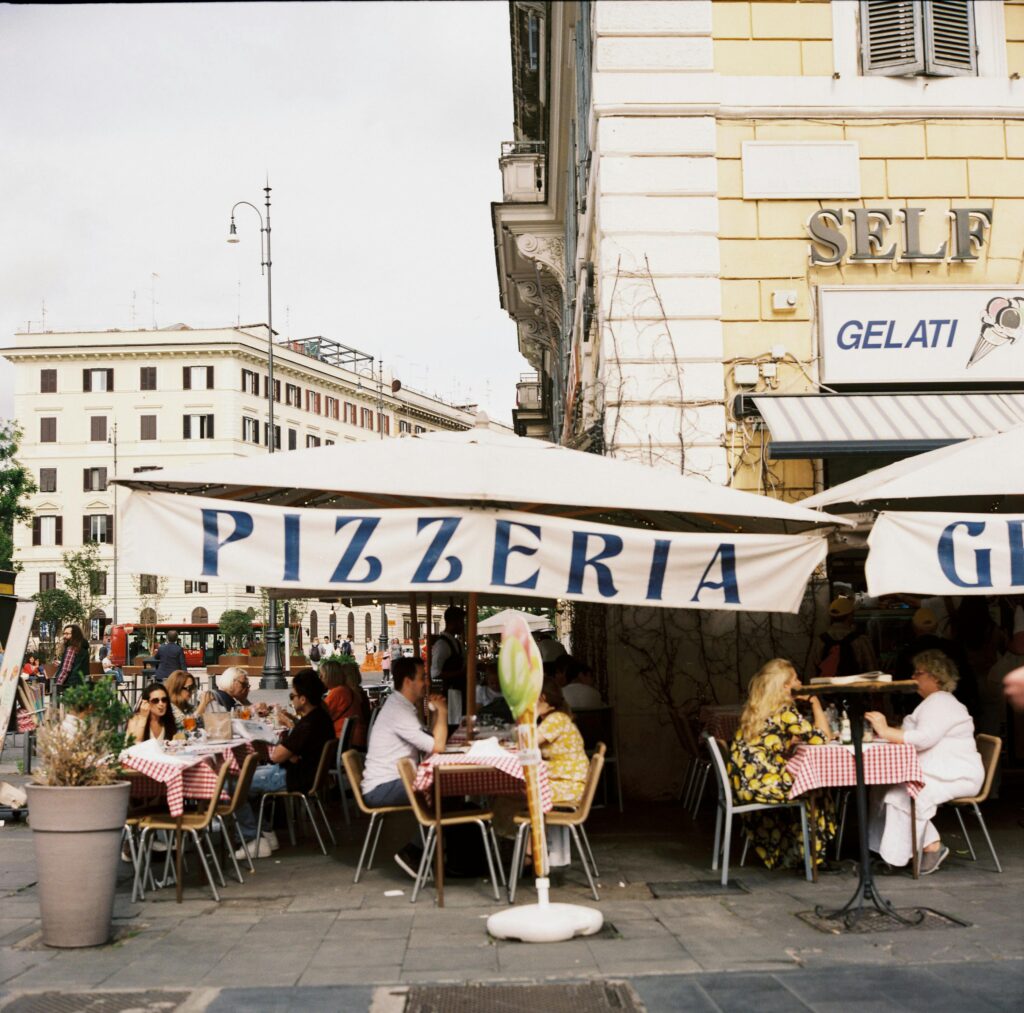
Not because every street is beautiful, but because no matter how many times we visit, the city continues to surprise us. A quiet church tucked between busy avenues. A neighborhood café that still remembers familiar faces. Rome rewards curiosity more than efficiency.
Tuscany
There’s a temptation to race from vineyard to vineyard, hill town to hill town. We’ve found Tuscany is best experienced by staying put long enough to know where the afternoon light falls and which café you’ll return to tomorrow morning.
Puglia
Puglia asks less of you. The pace softens, meals stretch longer, and afternoons rarely unfold exactly as planned. It’s one of those places where slowing down happens naturally.
Every return begins with a different reason. The common thread is that each invites us to stay a little longer.
Moving Through Place
Walking Through Matera
Some places are best understood in motion. Before planning the journey, spend a few quiet moments walking through the cave town of Matera.
Go Deeper
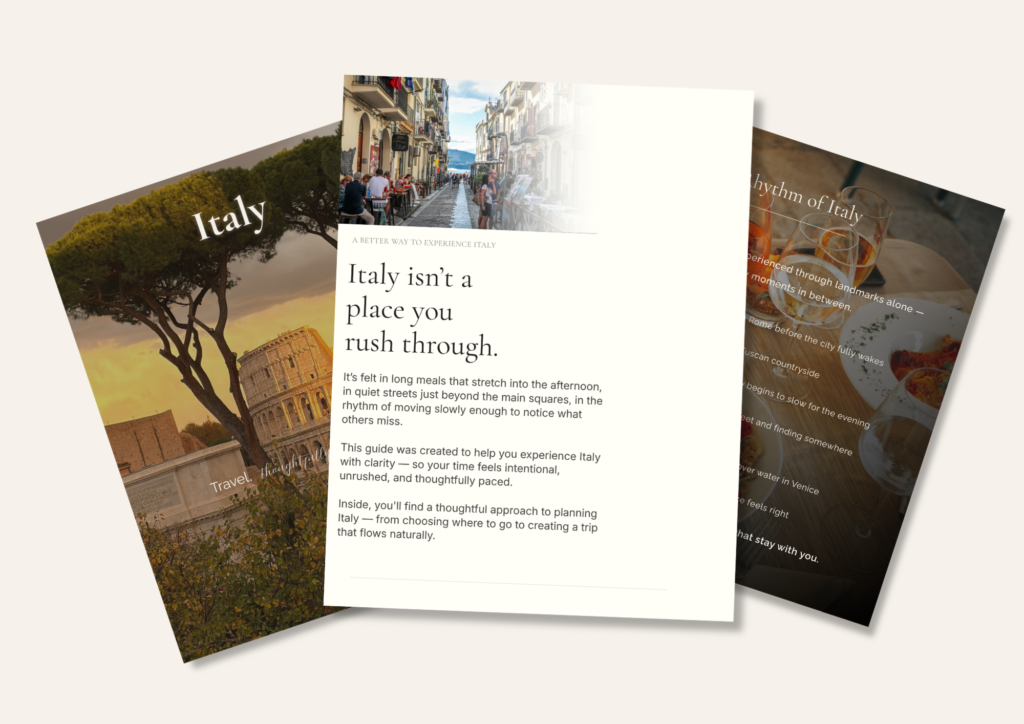
There’s no one way to experience Italy
Some trips move between iconic cities, taking in history, art, and architecture.
Others slow down—focusing on a single region, like Tuscany or the Amalfi Coast.
Some travelers want their first visit to include the highlights.
Others are drawn to quieter corners, smaller towns, and a more local pace.
Most fall somewhere in between.
The key isn’t doing more—it’s choosing what fits your pace and interests.
Small Decisions Often Shape Italy Most
Where you stay influences the rhythm of each day.
A hotel steps from a neighborhood café creates a different experience than one beside a busy train station.
The pace of an itinerary matters as much as the places it includes.
The best journeys rarely feel rushed.
Local Traditions
The Art of Apulian Focaccia
Some traditions are best experienced by taking a seat at the table.
During a hands-on cooking experience in Bari, we learned the techniques behind authentic Apulian focaccia from a local nonna who has been making it for decades. The lesson was about more than ingredients—it was a glimpse into the hospitality, generosity, and everyday traditions that define life in southern Italy.
Spend a few quiet moments inside her kitchen.
PLANNING ITALY
Every destination inspires questions before it becomes a journey.
Here are a few of the ones we hear most often from travelers planning
their time in Italy.
How many days do you need for Italy?
For first visits, many travelers find 10–14 days allows enough time to combine major regions with slower experiences without feeling rushed.
Should first-time travelers visit multiple regions?
Often yes — but balance matters. Thoughtful pacing often creates more memorable experiences than trying to see everything in one trip.
Is Italy better in spring or fall?
Spring and fall often provide milder weather and comfortable pacing, while summer offers longer evenings and energy that appeals to many travelers.
Is Northern or Southern Italy better?
Neither is universally better — they offer different experiences.
Northern Italy often appeals to travelers seeking lakes, mountain scenery, and refined city experiences.
Southern Italy often attracts travelers looking for coastline, slower rhythms, and regional character.
When should Italy be planned?
Italy is best planned earlier than many travelers expect, particularly for spring, summer, and holiday travel periods. For the most choice in hotels, experiences, and pacing, planning 6–12 months ahead often creates the strongest experience. More complex itineraries, milestone trips, or peak-season travel can benefit from even earlier planning.
How far in advance should Italy hotels be reserved?
For high-demand destinations such as Rome, Florence, the Amalfi Coast, Tuscany, Lake Como, or smaller boutique properties, reserving hotels 6–9 months in advance is often ideal. Italy’s most memorable accommodations tend to fill earlier than travelers anticipate, especially during spring and early fall.
Should Italy include multiple hotel stays?
Italy often feels most rewarding when travelers experience more than one region, but balance matters. Two to four thoughtfully chosen stays frequently creates a comfortable pace without feeling like constant unpacking and transit days. The goal is experiencing Italy well—not simply seeing as much as possible.
How much moving around feels comfortable?
For many travelers, changing hotels every two to four nights begins to feel rushed. A slower rhythm—allowing time to settle into a destination, enjoy unplanned moments, and experience places beyond major landmarks—often creates a more memorable Italy experience.
What makes Italy feel rushed?
Italy can begin to feel rushed when too many destinations, hotel changes, or long travel days are packed into one itinerary. Trying to experience Rome, Florence, Venice, Tuscany, Cinque Terre, and the Amalfi Coast in a short trip often leaves travelers feeling like they spent more time moving than experiencing. Italy tends to feel its best when itineraries leave room for slower mornings, longer meals, and time to enjoy a destination rather than simply checking it off a list.
Planning, Thoughtfully.
When you're ready, we'll help shape an Italy journey around the way you travel.