
Germany, thoughtfully planned.
Germany Beyond Landmarks
Historic cities, vineyard valleys, alpine landscapes, and journeys designed with space to enjoy them.
Featured
Christmas in Rothenburg ob der Tauber
For many travelers, Germany and Christmas are inseparable. From late November through December, Christmas markets fill town squares and historic streets across the country, drawing millions of visitors for the traditions, food, lights and atmosphere that have become synonymous with a German Christmas.
Among those towns, Rothenburg ob der Tauber has a particular appeal. Within its medieval walls, half-timbered houses, stone towers and narrow streets give the town a setting that feels particularly suited to Christmas. Yet Rothenburg is more than a backdrop for a Christmas market. The pleasure is in being there as the afternoon fades, watching the lights come on, lingering over a warm drink and wandering through streets that look quite different after dark.
Christmas simply gives you another way to experience Rothenburg.
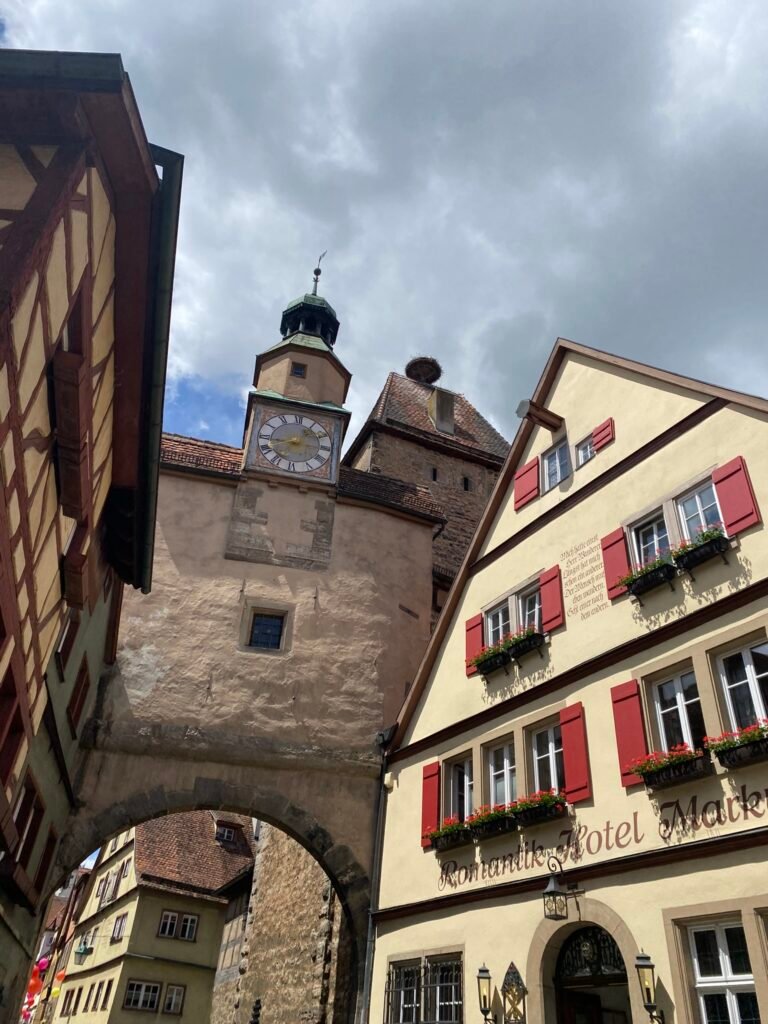
Arriving in the afternoon
If you have a choice, arrive while there is still daylight. The hours before sunset give you time to appreciate the architecture and explore the town before the Christmas lights become the focus.
Rather than trying to cover every landmark, walk. Follow the streets toward the market square, take a quieter lane when one catches your attention, and look closely at the houses and doorways. If the weather permits, walk a section of the town walls.
As afternoon turns to evening, windows begin to glow and the old façades take on a warmer appearance. Wandering through the town, the Reiterlesmarkt gradually becomes part of the scene, filling the center with wooden stalls, food, warm drinks and seasonal traditions.
Staying after dark
Rothenburg is easy to visit as a day trip, but staying overnight changes the pace of the visit.
Dinner becomes part of the evening rather than something fitted between sightseeing stops. There is time for another walk through the old town, perhaps along a street you passed earlier, without worrying about the next departure.
The following morning, the streets are quiet, shops are just opening and the medieval town feels less like a collection of famous views and more like a place where people live.
Christmas beyond December
The Reiterlesmarkt is the most visible expression of Christmas in Rothenburg, typically running from November 20 through December 23 and encompassing much of the Advent season. Käthe Wohlfahrt’s Christmas Village and the German Christmas Museum are part of the town’s enduring connection to Christmas.
I experienced that firsthand when I visited Rothenburg in June. The days were long, the weather was warm and there was no Christmas market in the town square, yet stepping into Käthe Wohlfahrt’s Christmas Village immediately brought Christmas back into the picture. Surrounded by ornaments, decorations and familiar Christmas imagery, it was an unexpected experience in the middle of summer. While the market is seasonal, the Christmas traditions remain part of the town throughout the year.
Winter without the postcard
Snow may complete the familiar picture of Rothenburg at Christmas, but it isn’t something to plan a trip around. A cold, dry evening has its own appeal, particularly when darkness arrives early and the lights stand out against the old façades.
Winter’s short days also change the rhythm of a visit. Christmas lights appear in the late afternoon, leaving more of the evening for walking, eating and lingering.
A visit between the opening of the Reiterlesmarkt and Christmas brings the market, decorations and illuminated old town together. A weekday visit may also suit travelers looking for a quieter experience than the busiest weekends.
A practical note
Start with the dates. If seeing the Reiterlesmarkt is important to you, check the market calendar before booking the rest of your trip and make sure your visit falls within its operating dates. Then check the opening hours for the specific day you plan to be there, particularly if you are visiting near the beginning or end of the season.
Next, plan around daylight. Aim to arrive in the afternoon rather than just before the market, giving yourself time to walk the old town, see the architecture and, if conditions allow, explore part of the town walls. Stay into the evening so you can experience the transition from daylight to Christmas lights rather than treating the market as a standalone stop.
If you are deciding whether to stay overnight, ask how much time you want in the town rather than simply how many sights you want to see. A day trip works if the market and principal sights are your focus. An overnight stay gives you dinner in the old town, another walk after dark and a quieter morning before the day’s visitors arrive.
Finally, plan for winter conditions even if snow is not in the forecast. Wear shoes suitable for walking on stone streets, bring warm layers and be prepared for rain, wind or cold. The town is compact enough to explore on foot, and much of what makes a winter visit worthwhile happens outside.
Experiencing Rothenburg at Christmas
The temptation with a place as recognizable as Rothenburg is to spend the visit searching for the photograph you have already seen. The Plönlein, market square, decorated shops and familiar medieval streets are the places most likely to appear in photographs of Rothenburg.
Some of the most memorable moments happen between those places: a warm drink after walking the walls, footsteps on the stone streets, a shop window glowing after sunset, or the contrast between the busy market and a quiet lane nearby.
Whether you arrive in December for the Reiterlesmarkt or in June and discover an unexpected taste of Christmas inside Käthe Wohlfahrt’s doors, Rothenburg has managed to make Christmas part of its identity rather than simply a season on its calendar.
Planning a Visit to Rothenburg
When is the best time to visit Rothenburg at Christmas?
If the Christmas market is the reason for your visit, plan around the Reiterlesmarkt, which runs November 20–December 23, 2026, with a closure on November 22. Market hours are generally 11 a.m.–7 p.m. Sunday through Thursday and 11 a.m.–8 p.m. Friday and Saturday.
But we wouldn’t automatically choose the busiest weekend. A weekday visit can give you more time to experience the old town without making the Christmas market itself the entire experience.
How long should you stay in Rothenburg?
Rothenburg can be visited as a day trip, but we would favor at least one night if Christmas is the reason you’re coming.
Staying overnight lets you experience the town after many day visitors have left and see the old streets in the evening, when the Christmas lights become part of the experience.
For a broader Bavaria itinerary, one or two nights is usually enough. The point isn’t to fill a long list of attractions; it’s to give the town time to unfold.
Should I stay inside the old town?
For a first visit, we’d lean toward staying inside the historic walls or immediately adjacent to them.
That puts you close to the market, streets, restaurants, and evening atmosphere—and means you don’t have to organize transportation every time you want to go out.
If you’re driving, however, check the property’s arrival and parking arrangements before booking. Rothenburg has substantial parking outside the old town, and its tourism service specifically recommends the larger car parks outside the walls for many visitors. Hotels and businesses can still be reached by car, although the old town has a nighttime driving restriction from 7 p.m. to 6 a.m
Is Rothenburg easy to reach without a car?
Yes. Rothenburg has a railway station, and the old town can be reached on foot from the station. By rail, the usual route is via Würzburg or Ansbach and Steinach.
For a Christmas visit, arriving by train can be particularly appealing if you plan to stay in the historic center. There is little reason to have a car once you’re settled inside the old town.
Is Rothenburg better as a day trip or an overnight stay?
A day trip works if Rothenburg is one stop within a larger itinerary.
But we would choose an overnight stay for a Christmas visit.
The character of Rothenburg changes as the day visitors leave, and staying in town allows you to experience the market, dinner, evening streets, and the following morning without having to time everything around a departure.
What should I combine with Rothenburg?
Rothenburg works naturally within a Bavaria itinerary, particularly as part of a route through the Romantic Road or northern Bavaria.
Rather than using it as a base for a large number of day trips, we’d treat Rothenburg as a distinct stop. Its appeal is the experience of the town itself.
If Christmas is your focus, pairing Rothenburg with other Christmas markets can also be tempting, but we wouldn’t try to collect too many. A few places experienced well will usually make a more memorable trip than moving every night.
What should I know before visiting Rothenburg at Christmas?
Expect a real town, not just a Christmas market. The market is concentrated around the central squares, but the entire old town is decorated during Advent.
Book early. Christmas is one of Rothenburg’s most popular periods, particularly for accommodations inside the historic center.
Think about arrival before choosing your hotel. If you’re driving, understand where you’ll park and how you’ll get luggage to your accommodation.
Give yourself time after dark. Some of Rothenburg’s most atmospheric moments come after the daytime crowds begin to thin.
Don’t make the market the entire trip. Rothenburg is worth experiencing as a historic town first and a Christmas destination second.
Planning a trip to Rothenburg or other parts of Germany?
Tell us where you’re thinking of going, what matters most, and how you’d like the journey to feel.
Go Deeper
Rothenburg is one small part of a much larger Germany. From historic cities to countryside and quieter regions, there is plenty more to discover.
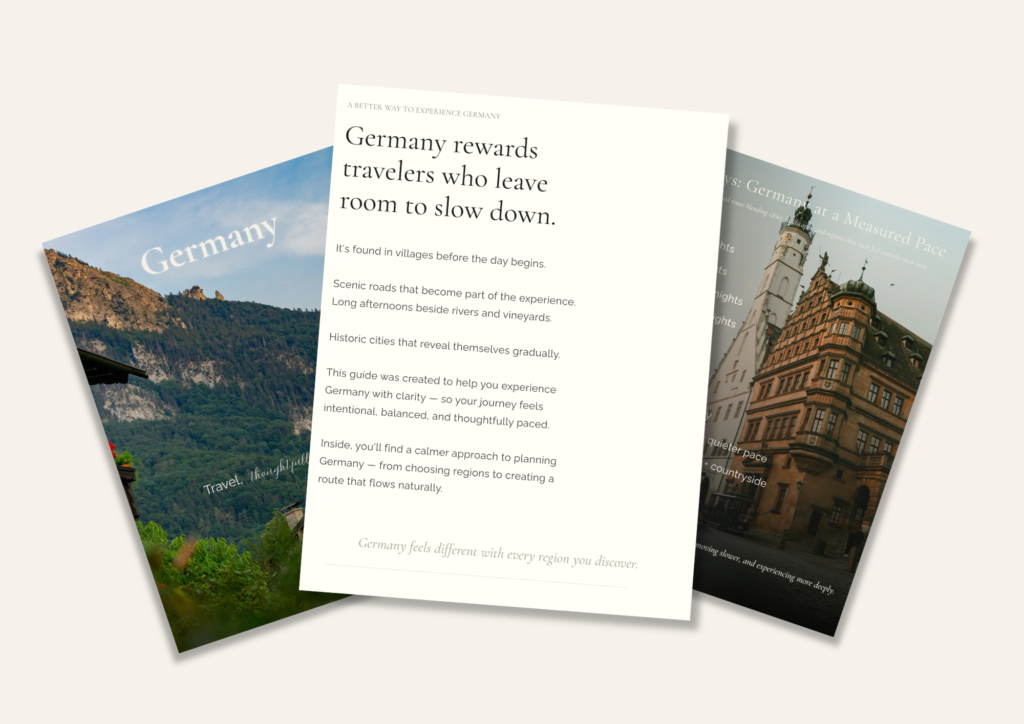
FIRST IMPRESSIONS
Germany, unexpectedly different.
Germany often surprises travelers.
Stretching past storied castles and Christmas markets are vineyard valleys, alpine villages, lakeside landscapes, and cities where history and modern life exist side by side.
Some travelers arrive focused on landmarks.
Others discover Germany slowly — through quieter regions, scenic drives, thoughtful pacing, and experiences designed to feel connected rather than rushed.
The difference is often not where you go.
It’s how the journey is designed.
PACING
Why Germany Works Well For Thoughtful Travel
Scenic Variety
Mountain landscapes, vineyard valleys, lakes, villages, and cities create natural balance.
Comfortable Pacing
Rail connections and regional flow make Germany especially rewarding when experienced thoughtfully.
Experiences Worth Seeking
Markets, cafés, wine regions, and slower moments often become the experiences travelers remember most.
Germany At A Comfortable Pace
Germany rewards travelers who resist trying to do everything.
A thoughtful itinerary often focuses on fewer regions and meaningful experiences rather than constant movement.
Munich and Bavaria.
The Mosel Valley.
Berlin paired with smaller historic towns.
Space creates the experience.
THE RHYTHM OF THE YEAR
Germany Through The Seasons
Germany changes dramatically throughout the year.
The experience of Bavaria in summer feels entirely different from winter market season. River valleys evolve through vineyard harvests. Alpine landscapes shift from hiking destinations to winter escapes.
Thoughtful timing shapes the journey.
When planning a trip, seasonality is a factor based on how you travel.
Some regions pair naturally depending on time of year.
Summer itineraries often lend themselves toward lakes and alpine landscapes.
Shoulder seasons create opportunities for quieter pacing.
Winter creates a different atmosphere entirely.
Thoughtful timing often shapes the experience as much as destination selection.
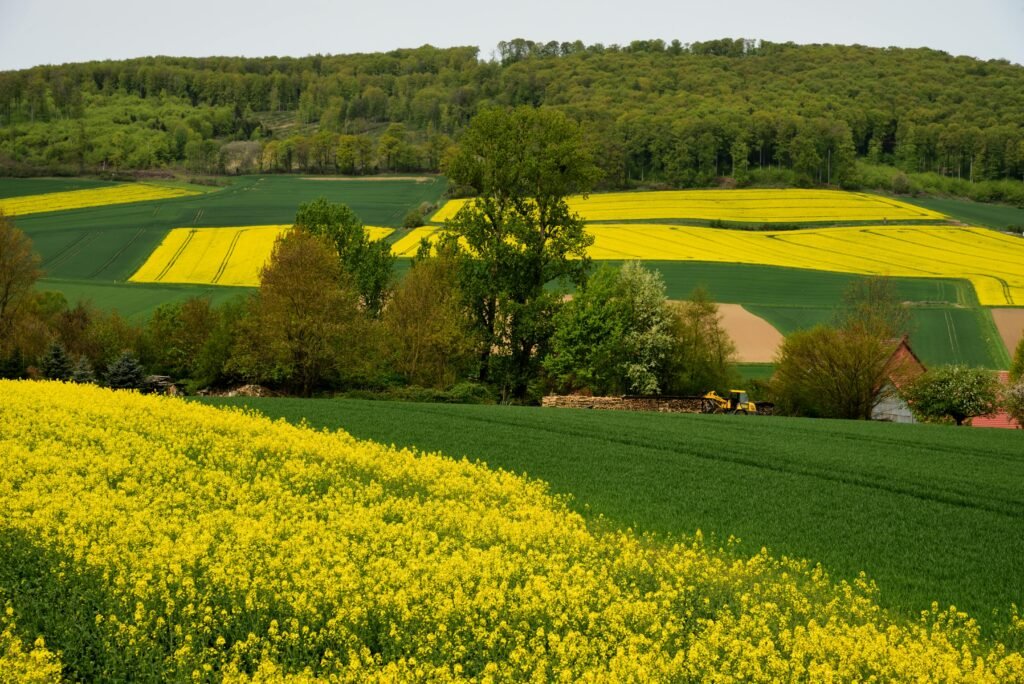
Spring
The valleys turn green before the crowds arrive.
Summer
Long evenings make slow itineraries easy.
AUTUMN
Germany’s forests become the destination.
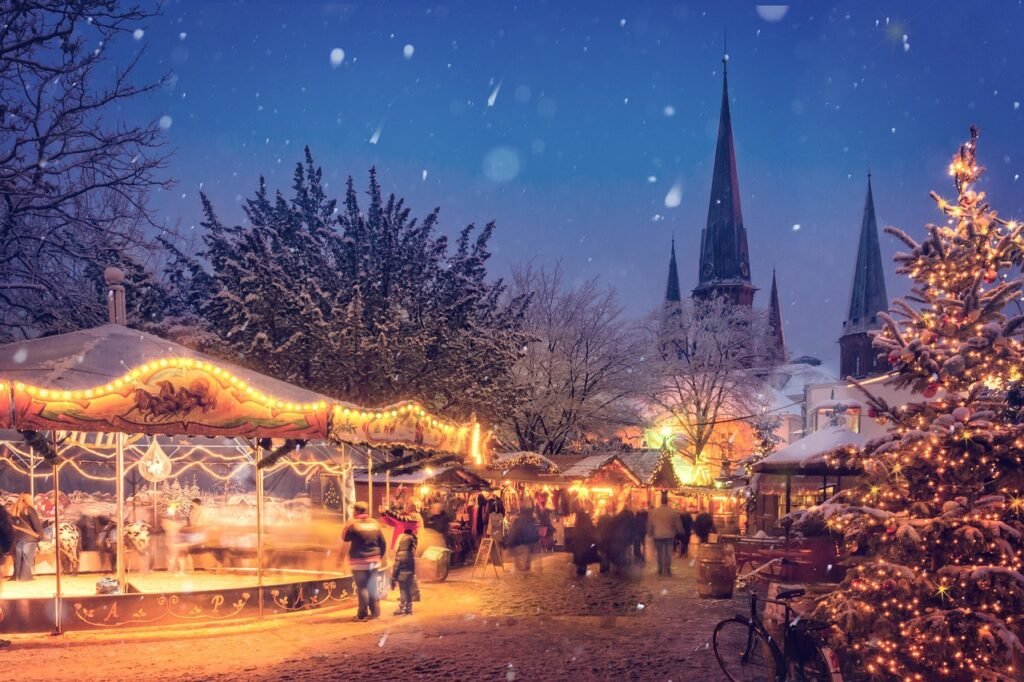
Winter
Christmas markets are only part of the story.
PLANNING
Before Planning Germany
Germany works best when expectations are shaped early.
Seasonality influences pacing.
Some regions naturally complement one another.
Others create unnecessary movement.
Understanding hotel transitions, transportation flow, and regional balance often creates a more comfortable experience.
How many days do I need for Germany?
Germany can work beautifully for a week, but two weeks gives you more room to experience its different sides without constantly moving.
Rather than trying to cover the country, we prefer choosing a few places that complement one another and allowing enough time to settle into each.
Which parts of Germany work well together?
Germany’s regions have remarkably different personalities.
Bavaria brings alpine landscapes, lakes, historic towns, and a strong food and beer culture.
The Rhine and Moselle valleys offer riverside villages, vineyards, castles, and slower scenic travel.
Berlin has an entirely different energy, shaped by history, art, design, and contemporary culture.
The Black Forest, Romantic Road, northern coast, and smaller cities each offer their own character as well.
We look for combinations that create contrast without making the journey feel hurried.
Is Germany easy to travel by train?
Yes. Germany’s rail network makes many city-to-city journeys straightforward, and trains can be an especially good way to experience the changing landscape between destinations.
For some journeys, however, a car offers access to smaller towns, countryside, and scenic roads that trains cannot reach.
We choose the mode of transportation around the experience, rather than assuming one approach is always best.
Do I need a car to travel around Germany?
Not necessarily. Many of Germany’s cities and major destinations are well connected by rail, making a car unnecessary for some itineraries.
A car becomes more useful when the journey moves into smaller villages, rural landscapes, or scenic regions where the journey itself is part of the experience.
The right choice depends on where you want to go and how you want to move through the country.
What time of year is best for Germany?
Germany changes considerably with the seasons, so there is no single best time to visit.
Spring brings fresh landscapes and longer days; summer is ideal for enjoying lakes, gardens, and the outdoors; autumn brings forests, harvest landscapes, and a quieter atmosphere; and winter transforms many towns into a different kind of experience, particularly around the Christmas markets.
We think about season as part of the character of the journey, not simply the weather.
Should I visit Germany's famous landmarks?
Some are absolutely worth seeing.
Germany rewards looking beyond the most recognizable sights, too.
A scenic road, a small town, a local market, a regional meal, or an afternoon spent simply moving through the landscape can become just as memorable.
We think the most satisfying itineraries balance the places you know you want to see with enough room for experiences you could not have found on a checklist.
What makes Stahr Travel's approach to Germany different?
We don’t begin with a list of landmarks and work outward.
We begin with how you want the journey to feel.
Germany offers an unusual range of experiences—from cities and culture to forests, mountains, rivers, food, and seasonal traditions—and thoughtful planning is often about deciding what to leave out as much as what to include.
We shape the journey around that balance, creating an itinerary with enough structure to feel effortless and enough space to feel like travel.
Planning, Thoughtfully.
Germany offers remarkable variety.
The right pace often creates more memorable experiences.