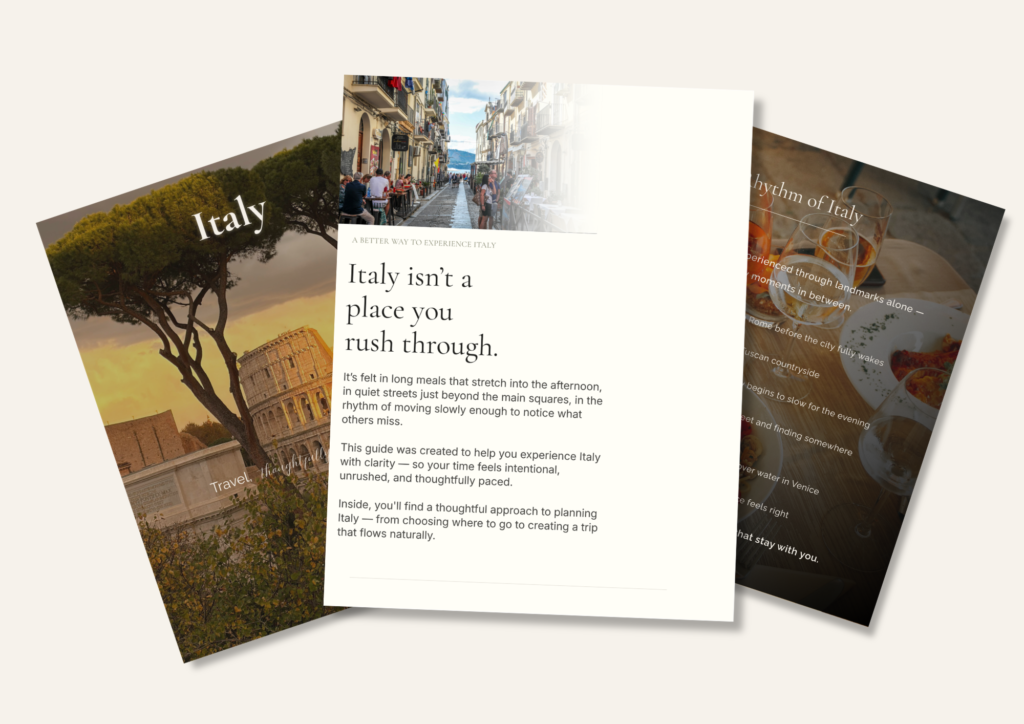
A journey through Italy
Italy, Designed Around How You Travel
Italy isn't simply a destination to see — it's a place experienced through pace, atmosphere, thoughtful planning, and choosing what matters most to you.

LIVING LA DOLCE VITA
Some Places Reward Seeing More.
Italy is One of Them.
It’s easy to arrive with a map full of famous names—Rome, Florence, Venice, the Amalfi Coast—believing the best journey is the one that covers the most ground, but Italy has a way of slowing even the most carefully planned itinerary.
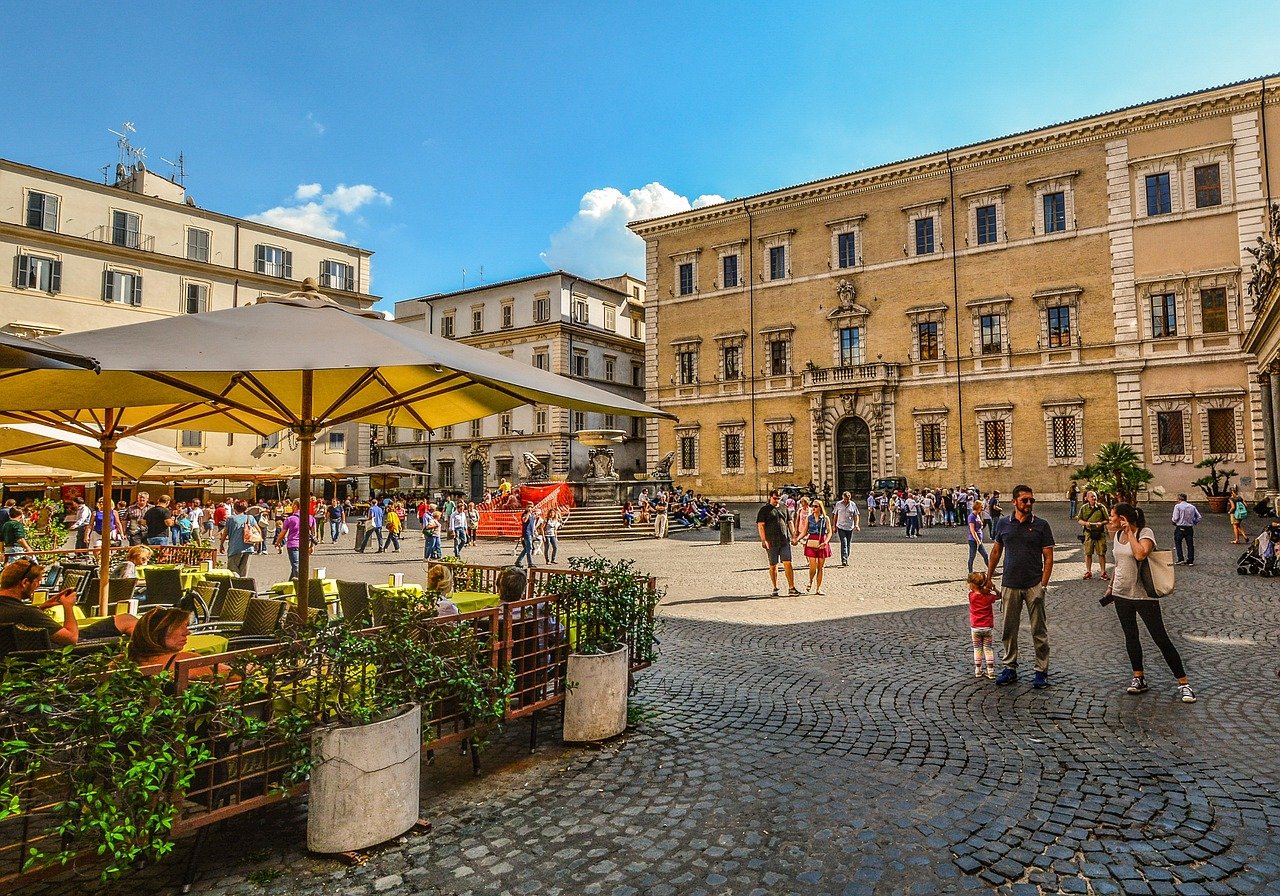
A lingering lunch in a quiet piazza. An unexpected conversation with a shop owner. A vineyard road that deserves an unplanned detour. These are often the moments remembered long after the landmarks begin to blur together.
We’ve found that the most memorable journeys aren’t defined by how many places they include, but by how naturally they unfold. For some travelers, that means spending a week exploring the hill towns of Tuscany. For others, it’s balancing the energy of Rome with a slower pace in Umbria, Puglia, or the shores of Lake Como.
Before choosing hotels, routes, or reservations, we start somewhere simpler: how do you hope Italy will feel?
That answer shapes everything that follows.
Discover Italy, Region by Region
Explore Italy’s regions, discover distinctive places, and find inspiration for where your next journey might take you.
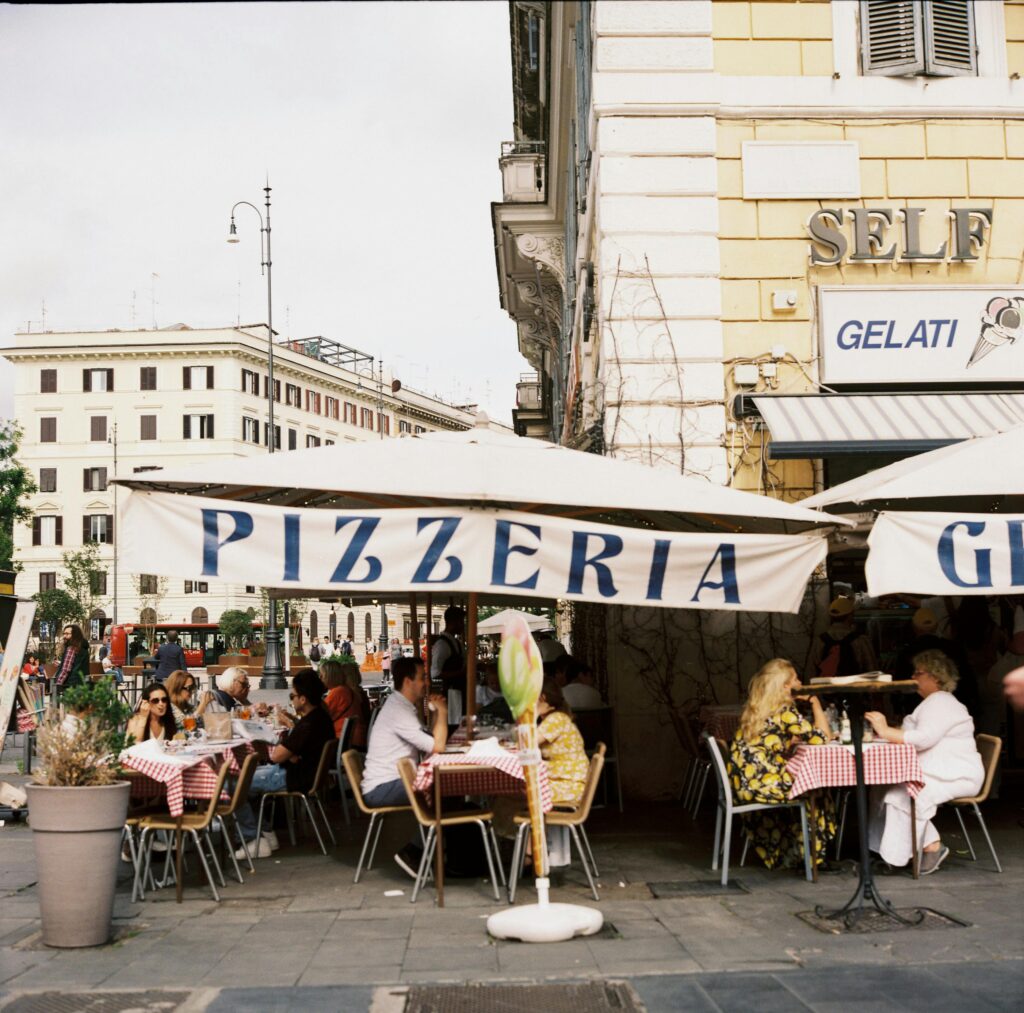
Train
or Car?
Italy has an extensive rail network, with high-speed trains connecting many of its major cities and making rail travel a practical option for exploring the country.
One of the biggest decisions when planning an Italian vacation is whether to travel by train or by car. While a car can be useful for certain destinations, it’s entirely possible to enjoy a rewarding trip through many of Italy’s most celebrated cities without the added expense and logistics of driving in a foreign country.
Our interactive map lets you explore the connections between major destinations, compare estimated journey times, and discover how easily different cities might fit into your itinerary.
Explore Italy by rail
Italy, connected.
Explore connections from the map, or choose two cities to compare the mapped rail corridors between them.
Explore beyond the route
A journey is more than the distance between cities.
Select a city on the map to discover what makes it worth a stop, a few highlights to explore, and ways it might fit into a wider Italian itinerary.
Ready to explore actual train options?
Once you’ve found a route that interests you, compare available journeys, departure times, and fares.
Compare train journeys with Omio →
Affiliate disclosure: Stahr Travel may earn a commission if you book through this link, at no additional cost to you.
Moving Through Place
Walking Through Matera
Some places are best understood in motion. Before planning the journey, spend a few quiet moments walking through the cave town of Matera.
JOURNEYS
An Italian Journey,
from Rome to Venice
Ten nights. Three distinct destinations. A journey that unfolds from the grandeur of Rome to the artistic heart of Florence and the quiet magic of Venice.
Italy invites travelers to see more, but a rewarding journey isn’t measured by the number of places visited. It’s found in the time to linger over a meal, wander beyond the familiar streets, and discover the character that makes each destination distinct.
For a first visit, Rome, Florence, and Venice offer a compelling introduction. Connected by rail and arranged in a natural northbound route, they bring together ancient history, Renaissance art, and the singular atmosphere of a city built upon water—all without requiring a change of country or a complicated travel schedule.
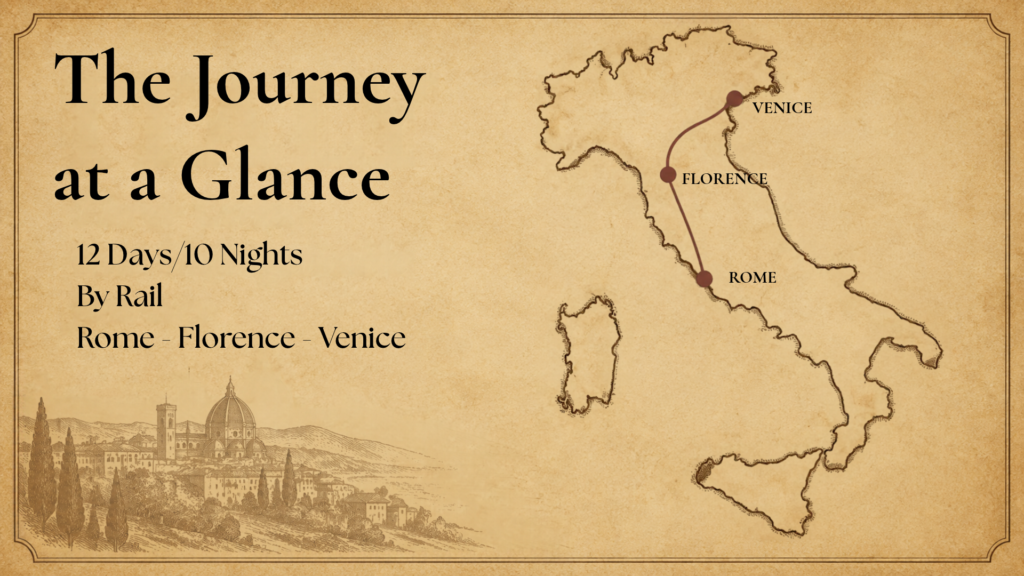
Days 1 - 5
Rome
Four nights · The Eternal City
Begin among ancient monuments and grand piazzas, where centuries of history sit alongside the rhythms of contemporary Roman life. Discover the city’s celebrated landmarks, then leave time for the quieter pleasures: a neighborhood walk, a lingering lunch, or an evening passeggiata as the streets begin to glow in the fading light.
Rome rewards curiosity, but it also rewards restraint. Choose a few experiences that matter most, rather than trying to see everything at once.
Days 6 - 8
Florence & Tuscany
Three nights · Art, landscape, and the pleasures of the table
Continue north by high-speed train to Florence, where Renaissance masterpieces, artisan workshops, and lively food markets make the historic center a pleasure to explore on foot.
With three nights, there’s room to look beyond the city, too. A day in the Tuscan countryside might bring hilltop villages, vineyard-covered slopes, and a long lunch at a family-run restaurant. Alternatively, stay in Florence and discover more of its museums, gardens, and quieter neighborhoods.
The choice depends on what draws you to Tuscany: its art and architecture, its countryside, or the particular pleasure of experiencing both.
Days 9 - 11
Venice
Three nights · A city unlike any other
End the journey in Venice, where the absence of ordinary roads changes the experience of moving through a city. Cross small bridges, follow narrow lanes toward unexpected squares, and watch the light shift across the canals.
The most memorable moments often come outside the busiest hours. Early mornings reveal a quieter Venice, while evenings invite an unhurried walk along the water after day visitors have departed.
Three nights allow time for the city’s major sights without making them the sole purpose of the visit.
Why This Route Works
The journey moves steadily north, connecting three major destinations by rail and avoiding unnecessary backtracking. Each stop brings a different character and pace, while the allocation of nights gives travelers time to settle in rather than treating every city as a brief stopover.
It is, however, a starting point rather than a prescription. Travelers who prefer a slower pace might spend longer in Tuscany and leave Venice for another visit. Those drawn to food, architecture, or the countryside might shape the middle portion of the journey quite differently.
The best itinerary isn’t necessarily the one that includes the most. It’s the one that gives you time for what matters most.
PLANNING ITALY
Your Journey,
Thoughtfully Planned
Every traveler brings a different idea of the ideal Italian holiday. We help turn those ideas into a considered itinerary, balancing destinations, accommodations, transportation, and experiences around the way you want to travel.
Frequently Asked Questions
Every destination inspires questions before it becomes a journey.
Here are a few of the ones we hear most often from travelers planning
their time in Italy.
How many days do you need for Italy?
For first visits, many travelers find 10–14 days allows enough time to combine major regions with slower experiences without feeling rushed.
Should first-time travelers visit multiple regions?
Often yes — but balance matters. Thoughtful pacing often creates more memorable experiences than trying to see everything in one trip.
Is Italy better in spring or fall?
Spring and fall often provide milder weather and comfortable pacing, while summer offers longer evenings and energy that appeals to many travelers.
Is Northern or Southern Italy better?
Neither is universally better — they offer different experiences.
Northern Italy often appeals to travelers seeking lakes, mountain scenery, and refined city experiences.
Southern Italy often attracts travelers looking for coastline, slower rhythms, and regional character.
When should Italy be planned?
Italy is best planned earlier than many travelers expect, particularly for spring, summer, and holiday travel periods. For the most choice in hotels, experiences, and pacing, planning 6–12 months ahead often creates the strongest experience. More complex itineraries, milestone trips, or peak-season travel can benefit from even earlier planning.
How far in advance should Italy hotels be reserved?
For high-demand destinations such as Rome, Florence, the Amalfi Coast, Tuscany, Lake Como, or smaller boutique properties, reserving hotels 6–9 months in advance is often ideal. Italy’s most memorable accommodations tend to fill earlier than travelers anticipate, especially during spring and early fall.
Should Italy include multiple hotel stays?
Italy often feels most rewarding when travelers experience more than one region, but balance matters. Two to four thoughtfully chosen stays frequently creates a comfortable pace without feeling like constant unpacking and transit days. The goal is experiencing Italy well—not simply seeing as much as possible.
How much moving around feels comfortable?
For many travelers, changing hotels every two to four nights begins to feel rushed. A slower rhythm—allowing time to settle into a destination, enjoy unplanned moments, and experience places beyond major landmarks—often creates a more memorable Italy experience.
What makes Italy feel rushed?
Italy can begin to feel rushed when too many destinations, hotel changes, or long travel days are packed into one itinerary. Trying to experience Rome, Florence, Venice, Tuscany, Cinque Terre, and the Amalfi Coast in a short trip often leaves travelers feeling like they spent more time moving than experiencing. Italy tends to feel its best when itineraries leave room for slower mornings, longer meals, and time to enjoy a destination rather than simply checking it off a list.
Go Deeper