
Roaming Italy
From the Alps to the Mediterranean
From historic cities and hill towns to coastal villages and Mediterranean table, Italy invites you to travel with curiosity and a sense of unhurried discovery.
Explore the regions
A country of many characters.
Select a region to discover its cities, landscapes, and character. From the Alpine north to the Mediterranean south, each place has its own traditions and way of life.
EDITOR'S LETTER
Italy has been photographed, ranked, and recommended more than almost anywhere else in the world. Yet the places that stay with us are rarely the ones we expected. These pages are gathered slowly over time through observations, stories, films, and conversations—not to help you see everything, but to help you notice more. Some stories stay with us long after we've returned home. Those are the ones you'll find here.
Interested in a trip to Italy?
FEATURED
The Streets of Lecce
Lecce has an unusual arrangement.
At its center is a beautifully preserved old city of Baroque churches, limestone palazzi, narrow streets, and quiet courtyards. Around it is a very different Lecce: busy, contemporary, energetic, and unmistakably alive.
The old city is marked by three historic gateways: Porta Napoli, Porta San Biagio, and Porta Rudiae.
Pass through one of them and the character of the city changes almost immediately. The streets narrow, the buildings close in, and the warm, honey-colored pietra leccese becomes the dominant feature of almost every view.
Lecce is also beginning to attract more attention from travelers, and it is easy to understand why.
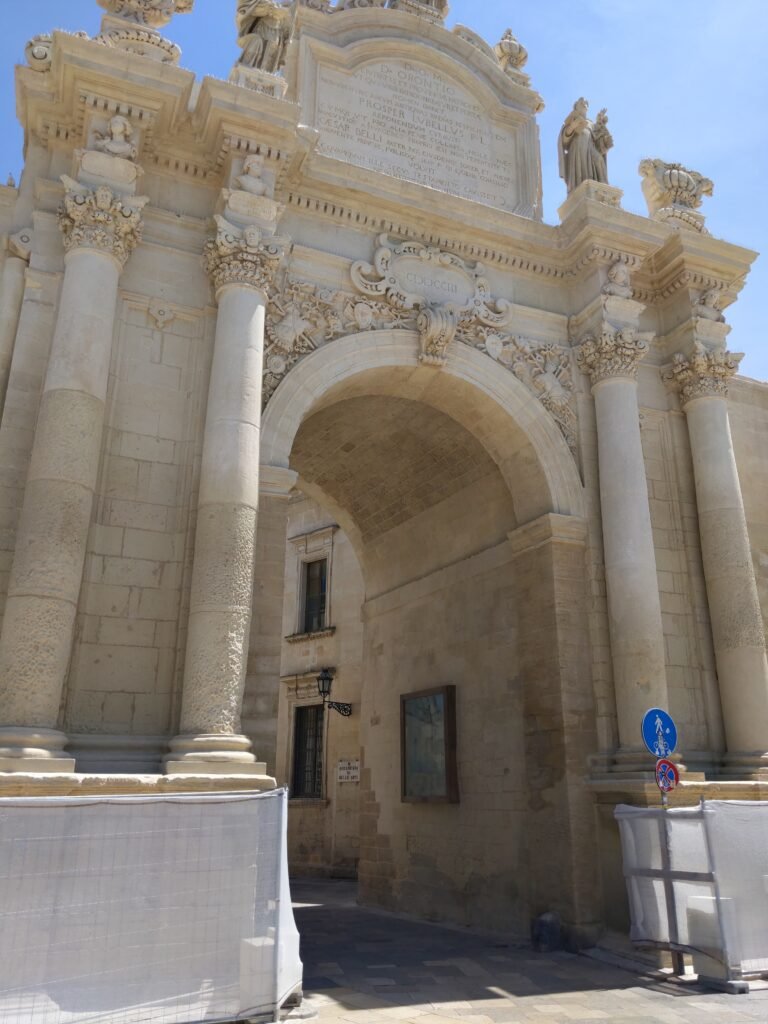
Inside the Old City
Lecce’s local limestone is unusually soft when quarried, allowing generations of artisans to carve extraordinary detail into the city’s buildings.
Balconies, columns, doorways, window surrounds, saints, flowers, faces, and fantastical figures appear throughout the historic center.
In bright afternoon sun, the stone can look almost golden. In the shade of a narrow street, it becomes quieter and more subdued.
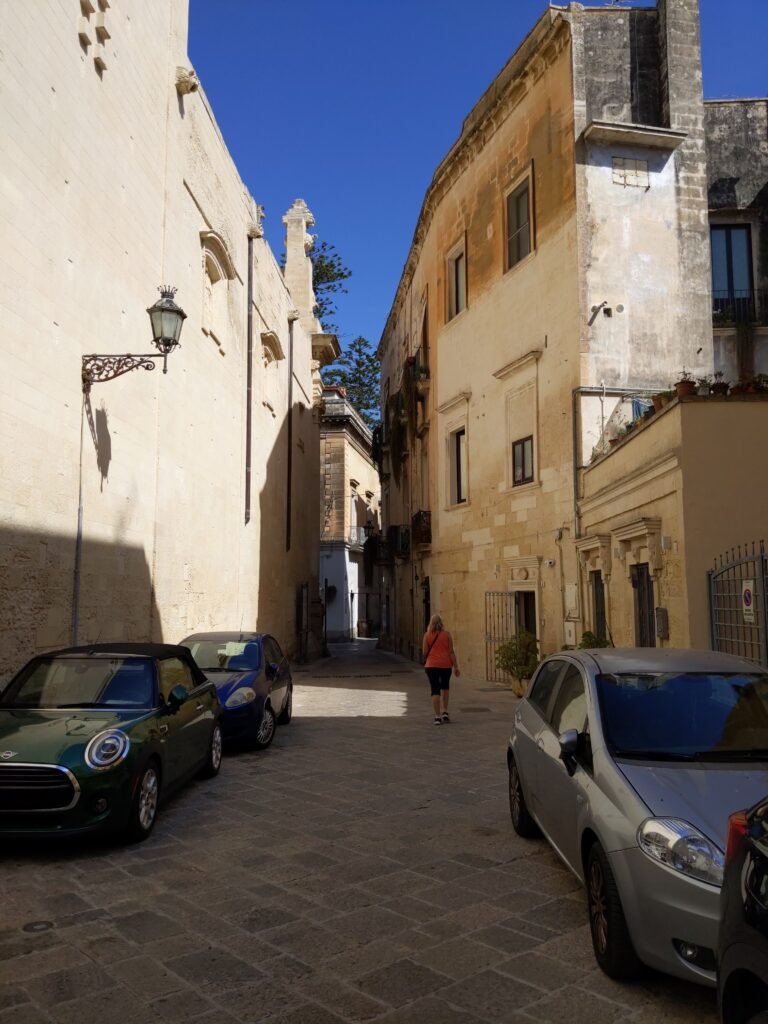
The architecture is elaborate, but the streets themselves are intimate.
A grand façade might occupy one side of a small lane. A modest doorway can sit beneath an extraordinary carved balcony. Streets bend and intersect rather than leading you through a neatly arranged sequence of monuments.
Arriving in the Old City
One practical detail becomes apparent quickly: the historic center is not really a place for ordinary car traffic.
Access by car is generally restricted, with residents and workers among those permitted to drive in areas where visitors cannot. We parked outside the old city and made our way on foot to our villa, deep in the historic center.
It was a useful introduction to Lecce.
The car stayed behind, and the city took over from there.
For anyone staying inside the old city, parking and access are worth considering when choosing where to stay. A villa or hotel that looks wonderfully central on a map may still mean carrying luggage some distance from where you can leave the car.
The Roman Amphitheatre
Near the heart of the historic center sits something considerably older than Lecce’s Baroque architecture: a Roman amphitheatre.
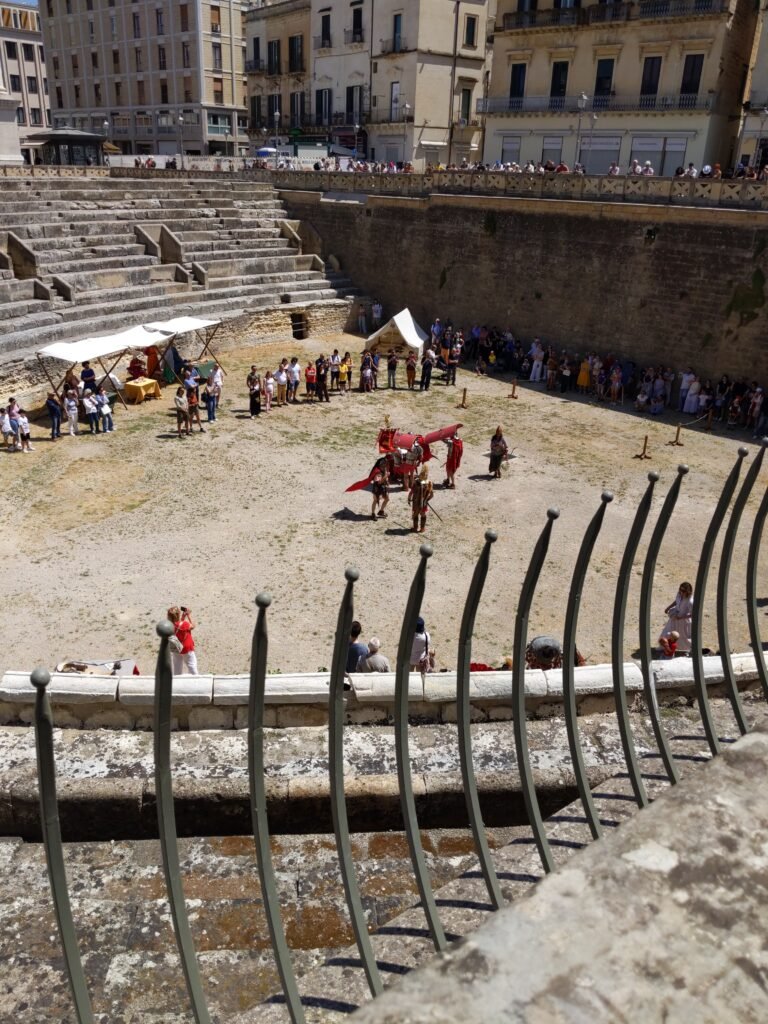
We came upon it while walking through the city and found a re-enactment taking place, with performers in Roman dress and spectators gathered around the ancient structure.
It was an unexpected scene.
The amphitheatre remains part of the fabric of the modern city, surrounded by streets, shops, cafés, and the steady movement of people through the center. The ancient structure sits directly within all of it.
For a city so strongly associated with the Baroque, it is a striking reminder of how much older Lecce really is.
The Pleasure of the Streets
The best stretches of Lecce are often the simplest ones.
A narrow lane opens onto a small piazza. A church façade appears at the end of a street. Stone balconies cast patterned shadows across the pavement. A doorway stands open onto a courtyard.
The historic center is compact enough that the major sights are close together, with plenty to notice between them.
And there are plenty of major sights.
The Basilica of Santa Croce is among the city’s most elaborate expressions of Lecce Baroque. Piazza del Duomo creates a more enclosed and theatrical space. Piazza Sant’Oronzo, with the Roman amphitheatre at its center, places ancient and modern Lecce almost literally side by side.
But between these places, the city becomes less formal.
That is where its character comes through most clearly.
An Afternoon in Lecce
An afternoon is enough to begin to understand Lecce without turning the city into a checklist.
Begin at one of the historic gateways and make your way toward the center. Spend time in a piazza. Stop when something catches your attention. Continue as the light changes.
By late afternoon, the stone takes on warmer tones, and the streets begin to fill again.
Cafés and restaurants become livelier. Residents move through the center. Visitors gather around the squares.
The old city hasn’t become a museum.
It remains part of a larger, energetic Italian city.
That contrast is one of Lecce’s defining qualities.
A Few Things Worth Knowing
Think carefully about luggage.
If you’re staying deep inside the historic center, you may have some distance between your car and your accommodation.
Book lodging with access in mind.
“Historic center” can mean very different things when you’re arriving by car.
Leave some room in your afternoons.
Lecce’s architecture and public spaces are worth experiencing without rushing from one sight to the next.
Consider Lecce as part of a larger Puglia trip.
Its location makes it particularly useful for exploring the southern part of the region.
Planning a Visit to Lecce
Lecce is beginning to attract more travelers, but it still feels like a city to settle into rather than simply pass through. A little planning makes the experience easier, particularly if you want to stay inside the historic center.
Getting There and Parking
If you’re driving, plan to leave the car outside the historic center.
Much of the old city has restricted vehicle access, with residents and authorized workers permitted to enter areas where visitors cannot. When we stayed in Lecce, we parked outside the center and walked to our villa, which was deep inside the historic city.
It’s worth considering this when choosing accommodation. A property that looks wonderfully central on a map may require some advance thought about where you’ll leave the car and how far you’ll carry your luggage.
If you’re arriving by train, Lecce’s railway station is just outside the historic center, making the city relatively straightforward to reach without a car.
Where to Stay
For a first visit, staying inside or immediately adjacent to the historic center has a distinct advantage.
Many hotels and boutique properties are located directly within the old city, putting the major sights, restaurants, and cafés close at hand. If you’re driving, however, check the property’s parking and vehicle-access arrangements before booking. Some properties have parking nearby or valet arrangements, while others require you to leave the car outside the restricted area.
How Long to Stay
Lecce can be visited as a short stop, but we would give it at least two nights.
That allows enough time to see the major sights without rushing and to experience the historic center at different times of day. Three nights gives you more room to settle into the city and makes Lecce a useful base for exploring southern Puglia.
On our own trip, we stayed in Bari and visited Polignano a Mare, Ostuni, and Alberobello before spending time in Lecce. Each place offered something different, but Lecce stood apart as a substantial historic city with a strong sense of everyday life beyond its attractions.
That experience shaped how we’d approach the region: rather than trying to see Puglia from one base, we’d build the trip around a few distinct places.
Getting Around
Once you’re in the historic center, a car is more of a hindrance than a help.
The streets are compact, many are narrow, and the major sights are close together. The center is easy to explore on foot, with plenty to see between the major landmarks.
If you’re staying outside the center, having a car gives you considerably more flexibility for exploring the surrounding region.
When to Go
Lecce can be particularly appealing in the shoulder seasons, when the weather is generally more comfortable for exploring and the city is less dominated by the height of the summer season.
Summer brings long days and the full energy of Puglia, but also higher temperatures and greater demand for accommodation.
Spring and early fall offer a useful balance for travelers who want time outdoors without planning every part of the day around the heat.
What to Pair With Lecce
Lecce works particularly well as part of a broader Puglia journey.
Puglia is long and geographically varied, and moving between a few carefully chosen bases can make more sense than spending hours driving back and forth. Lecce is particularly well suited to exploring the southern part of the region, while Bari and the towns farther north make sense as part of a different portion of the trip.
If you’re interested in the coast, one piece of local advice we heard repeatedly was to look toward Gallipoli and the Ionian coast for some of the area’s best beaches. We didn’t make it there ourselves, so this is one recommendation we’re passing along from the people we met rather than from personal experience.
For a first trip, we would give Lecce enough time to stand on its own, then use it as one part of a larger journey through Puglia rather than trying to make it the center of everything.
Interested in a trip to Lecce?
Lecce is only one way into southern Italy. Explore more of the region, or let us help you shape the journey around it.
FILM
Moving Through Place
Many stories are best told with words. Others are better experienced through movement.
seasonal planning
Italy by the Seasons
A month-by-month look at Italy’s weather, travel rhythms and experiences worth planning around.
May · Late spring
One of the most balanced months for combining cities, countryside and coast. Days are longer and outdoor touring is comfortable in many regions, before the busiest summer period.
Where to go in May

Florence & Tuscany
Art, gardens and countryside before summer heat.

Lake Como
Lakeside towns and scenic boat journeys.

Puglia
Whitewashed towns and a coast coming into season.
Notable events in May
Curated dates and traditions to consider
No published events with confirmed dates are listed for this month. Check back as programmes and dates are confirmed.
Seasonal weather, crowd and cost descriptions are broad planning tendencies, not forecasts or live price comparisons. Event listings show published dates in the next 12 months; always confirm details with the official organizer before booking.
NOTES FROM THE ROAD
A collection of small observations gathered along the way. The details that rarely make an itinerary, but often become the memories that linger longest.
Morning belongs to the locals.
The first espresso of the day is rarely rushed. Stand at the bar for a few extra minutes and you’ll begin to notice the familiar greetings, quiet conversations, and easy rhythm that unfold before the city fully awakens.
Leave room to wander.
Some of the most memorable streets aren’t marked on a map. Allow yourself an hour without a destination, and let curiosity make the next turn.
Listen before you photograph.
Every place has a soundtrack—the clink of porcelain cups, church bells echoing across a piazza, bicycles passing over stone, conversations drifting from open windows. Sometimes those sounds tell the story more completely than a photograph can.
Craftsmanship reveals character.
Whether it’s a chocolatier in Turin, a glassmaker in Venice, or a baker opening before sunrise, watching someone practice a craft often teaches more about a place than any museum label.
A slower meal changes the day.
Not every lunch needs a view. Sometimes the most memorable table is the one where no one is in a hurry to leave.
OBSERVATIONS
The Pace Between Places
Travel often begins with a list.
The museums we hope to visit. The cafés we’ve saved. The viewpoints we don’t want to miss. We arrive with good intentions, believing that seeing more will somehow mean experiencing more.
Italy has a gentle way of challenging that idea.
Somewhere between the cathedral and the next reservation, we begin to slow down. We linger a little longer over morning coffee. We wander down a side street simply because it feels inviting. We pause while an elderly couple greet shopkeepers they’ve known for decades. A craftsman shapes chocolate by hand in a quiet workshop in Turin. Laundry moves gently above an empty lane. A dog sleeps undisturbed beneath the shade of a tree while the city carries on around it.
None of these moments asks for our attention.
They simply wait for it.
The longer we travel, the more we discover that memorable journeys are rarely built from extraordinary moments alone. They are shaped by ordinary ones we were present enough to notice. The conversation we almost walked past. The bakery we entered because of its warm aroma. The piazza where we sat for twenty minutes with no purpose other than watching the afternoon unfold.
These moments don’t compete for space in a guidebook, yet they often become the memories we carry home.
Perhaps traveling well isn’t about covering more ground. Perhaps it’s about allowing a place enough time to reveal itself. Every destination has a rhythm, and no itinerary can experience it on our behalf.
Italy reminds us of this quietly. It rewards curiosity over urgency, observation over obligation, and presence over productivity.
When we travel this way, we return with more than photographs or souvenirs. We return with a different way of seeing—not only Italy, but every place that follows.
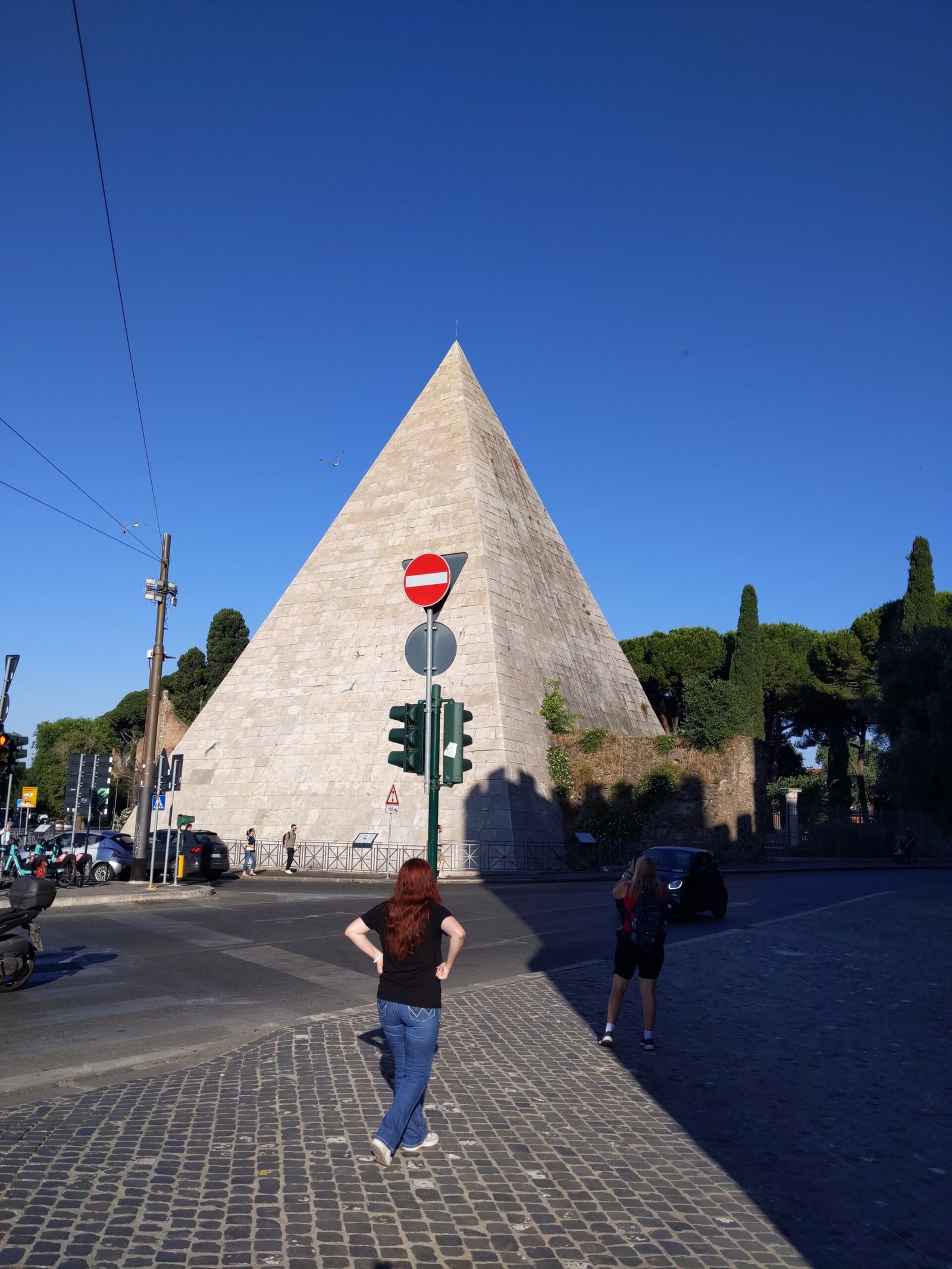
When you take your time to experience the places you visit, you can come across the most interesting things along the way.
LOCAL FLAVOR
The Morning Espresso
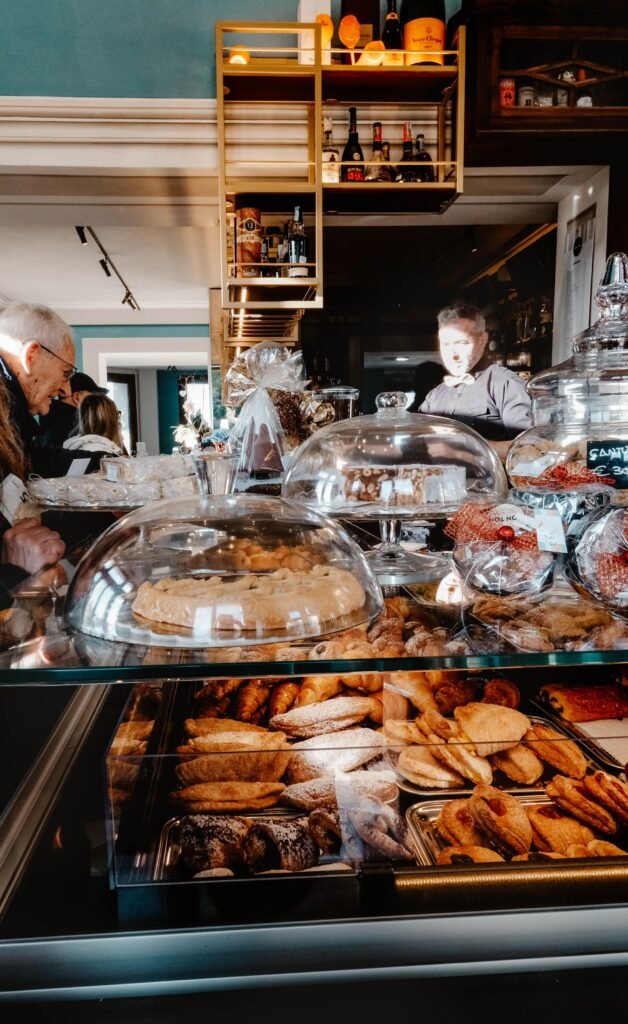
For many visitors, Italy begins with coffee.
For Italians, it often begins with something much quieter.
Step into a neighborhood café shortly after opening and you’ll notice that espresso isn’t treated as a leisurely event or a takeaway necessity. People step inside, greet the barista, exchange a few familiar words, enjoy a single espresso while standing at the counter, and continue with their morning. The ritual is measured in minutes, yet it feels unhurried.
At first glance, it seems almost too ordinary to notice.
But that’s precisely the point.
These small routines create the rhythm of daily life. They remind us that travel isn’t only about discovering extraordinary places; it’s also about paying attention to the ordinary moments that define them. The familiar greeting between customer and barista. The clink of porcelain cups. The quiet confidence with which everyone seems to know exactly how the morning unfolds.
Visitors sometimes search for the “best” café in a city, while overlooking the neighborhood bar where regulars have started their day for years. It’s there, away from long queues and carefully curated recommendations, that the simple act of ordering an espresso becomes less about coffee and more about belonging—even if only for a few minutes.
Perhaps that’s why the memory lingers.
Long after we’ve forgotten the names of cafés or the route we walked that morning, we remember the feeling of standing at a polished counter with a warm cup in hand, watching the city wake up around us.
Sometimes, the first lesson in traveling well arrives before breakfast.
DESTINATION COMPANIONS
FREE COUNTRY COMPANIONS
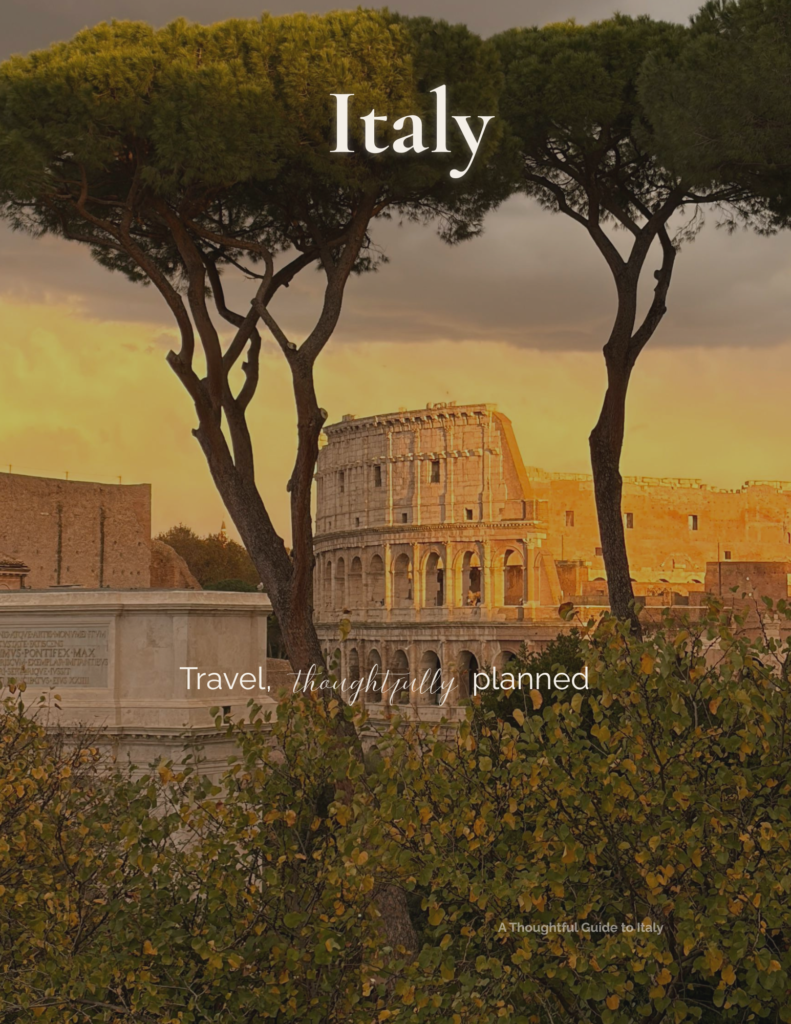
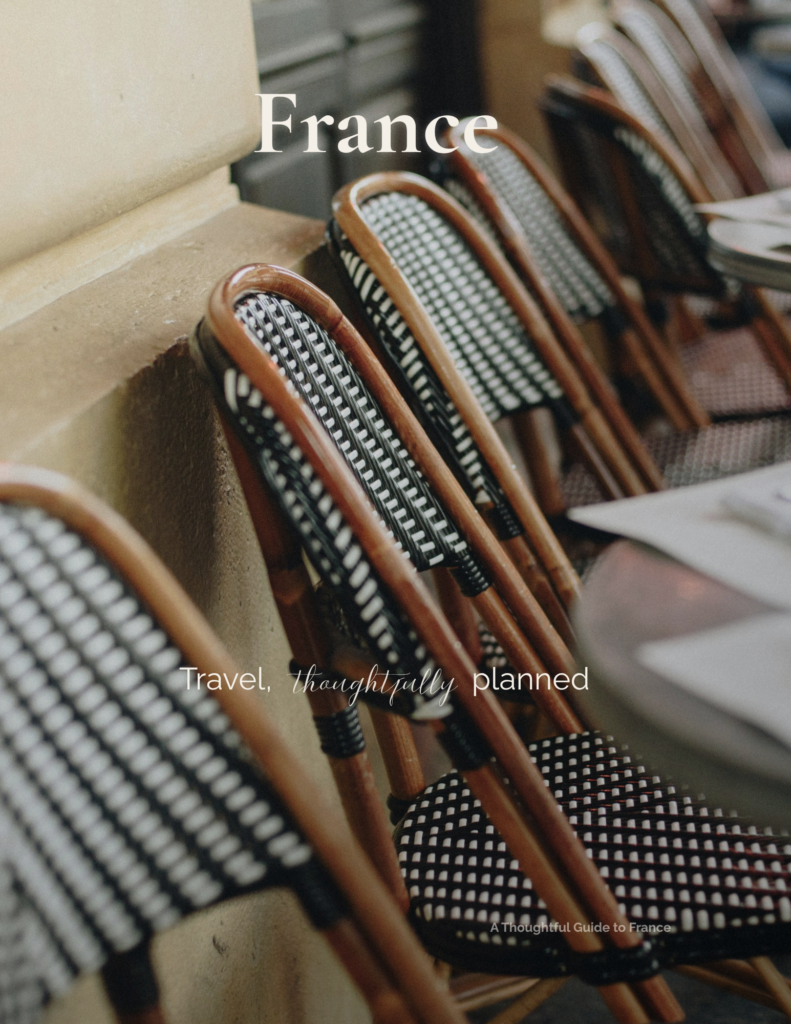
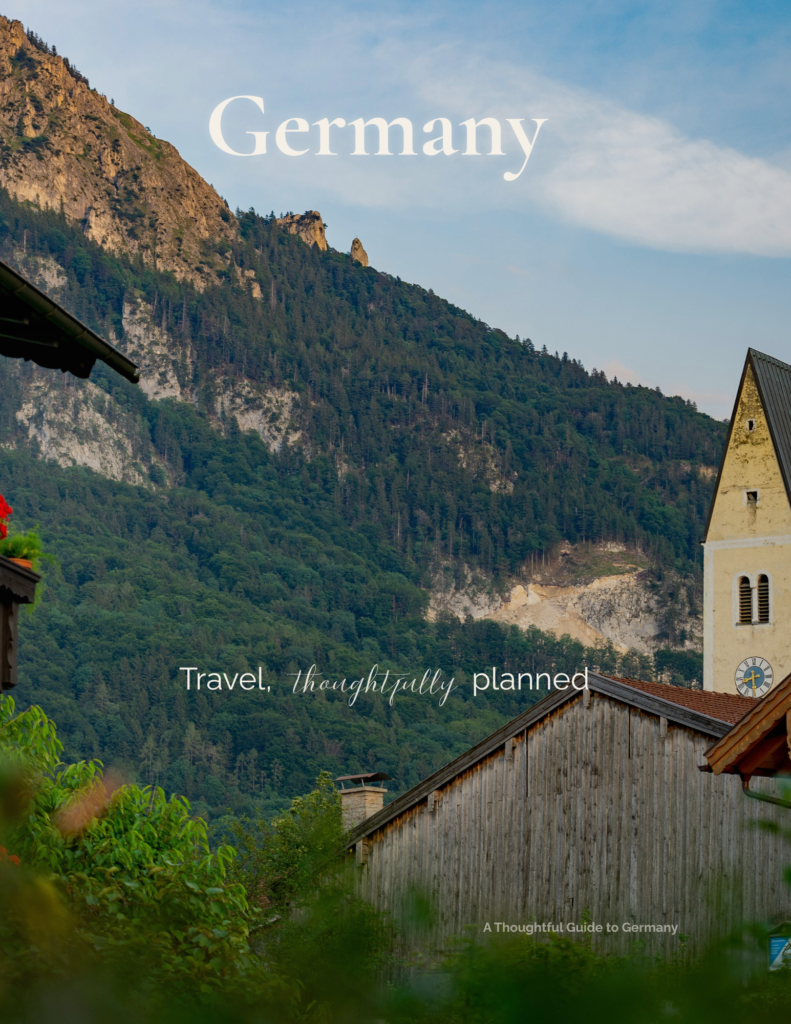
Discover more with these free in-depth resources that help you understand a place, uncover possibilities and plan with greater confidence.
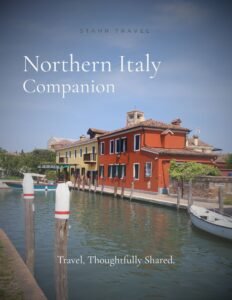
THE EXPANDED EDITION
Premium
Northern Italy
An expanded destination resource for exploring Northern Italy, with regional insight, curated recommendations, and practical guidance for planning your stay
BONUS PUBLICATION
Italy by Train
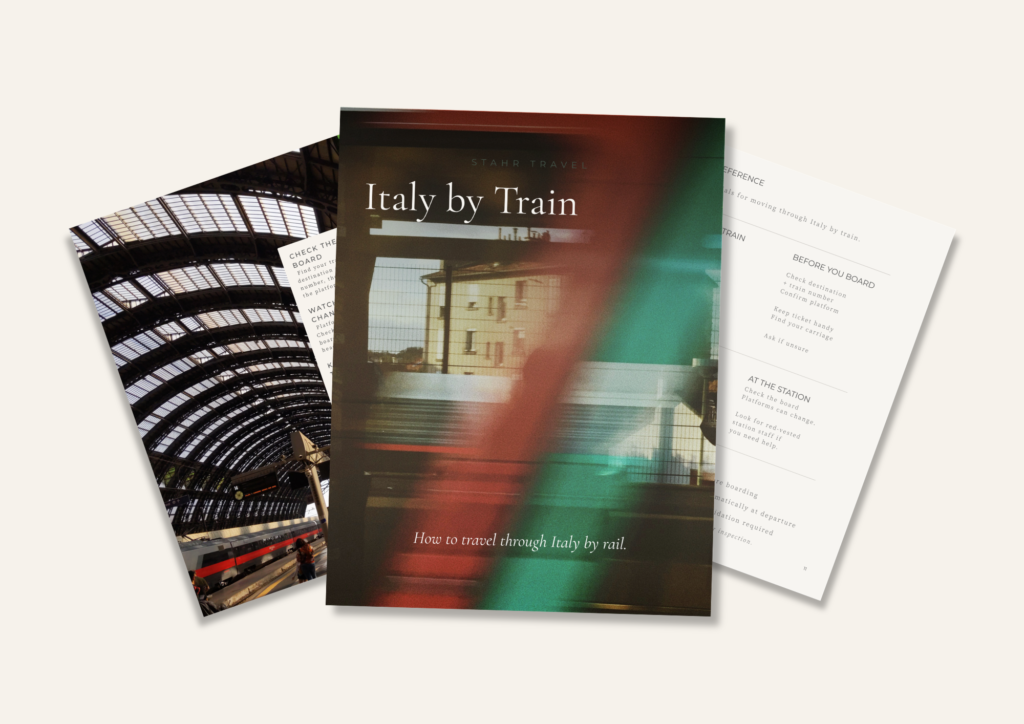
A separate Stahr Travel publication exploring the pleasures of traveling through Italy by rail — from the landscapes outside the window to the simple pleasure of making the journey part of the experience.
Included with your Northern Italy Companion purchase.
Ready to Begin Planning Your Journey?
Tell us where you’re thinking of going, what matters most, and how you’d like the journey to feel.

PERSONALIZED PLANNING SERVICES
Planning Well
For travelers who would rather spend their time anticipating a journey than organizing one, I offer a limited number of planning experiences each year.
Every itinerary is shaped around your travel style, priorities, and the moments that matter most.
How many days do I need for Italy?
There is no ideal number of days for Italy. A thoughtful trip is usually less about seeing everything and more about giving a few places enough time to become meaningful.
For many travelers, a week can create a satisfying experience in one region, while two weeks allows for a more varied journey without making every day a transfer. People also often overlook travel days – when traveling overseas the flights can take up a day in itself so you need to account for that.
We prefer to begin with how you want the trip to feel, then build the itinerary around that.
How many cities should I visit on one trip?
Usually fewer than you think. Italy is a surprisingly large country. Moving between places takes time, and the most memorable parts of Italy often happen when you aren’t rushing toward the next destination.
We generally prefer choosing a small number of places that complement one another, then allowing enough time to settle into each. A slower itinerary can often feel like a richer one.
What time of year is best for Italy?
The best time depends on where you want to go and how you want to experience it. Spring and early autumn can offer a particularly appealing balance of weather, atmosphere, and fewer peak-season pressures, while summer has its own rewards along with greater crowds and heat in many places.
Rather than choosing a season in isolation, we consider the places, pace, and experiences you have in mind.
Is Italy easy to travel by train?
For many journeys, yes. Italy’s rail network makes it particularly easy to connect major cities and regions without spending your trip behind the wheel.
High-speed trains are especially useful between places such as Rome, Florence, Bologna, Milan, Turin, and Venice, while regional trains can open up a different rhythm of travel.
We often consider the train not simply as transportation, but as part of the experience of moving through Italy. In fact, it makes a great itinerary where you can follow the path of the trains from city to city.
Which parts of Italy work well together?
The best combinations aren’t always the ones that look closest together on a map. We look for places that create a natural rhythm—perhaps a city followed by countryside, a cultural center followed by the coast, or several destinations connected easily by rail. The right combination also depends on the character of each place and the kind of experience you want to have.
Northern Italy can bring together elegant cities, lakes, mountains, and some of the country’s most distinctive food regions. Milan, Turin, Venice, the Italian Lakes, the Dolomites, and Emilia-Romagna each offer something quite different, while rail connections make many combinations relatively easy.
Central Italy has a different rhythm. Rome brings an extraordinary concentration of history, art, and daily life; Tuscany offers hill towns, wine country, and a slower countryside experience; and Umbria tends to feel quieter and more intimate. These places can work beautifully together when the itinerary allows enough time to move between the energy of the cities and the pace of the countryside.
Southern Italy often rewards an even more deliberate approach. Campania brings Naples, Pompeii, and the Amalfi Coast, while Basilicata offers the remarkable landscape and history of Matera. Further south, Puglia has its own distinctive character—from the baroque streets of Lecce and the coastal atmosphere of Gallipoli to the whitewashed towns, olive groves, and long lunches found throughout the region. Sicily is expansive enough to deserve a journey of its own, with its own landscapes, food traditions, and cultural layers.
Rather than trying to connect as many places as possible, we look for combinations that complement one another. Sometimes that means crossing regions; sometimes it means staying within one. The goal is a journey that feels naturally connected, rather than one assembled simply because every destination seemed worth seeing.
What makes Stahr Travel's approach to Italy different?
We don’t begin with a checklist of sights. We begin with the kind of experience you want to have.
Our approach considers pace, movement, place, food, culture, and the small details that make a journey feel personal.
The result is an itinerary designed not simply to take you somewhere, but to give you the time and context to experience it well.
How does bespoke planning work?
We begin by understanding you—the way you like to travel, what has drawn you to Italy, and what you want the journey to feel like.
From there, we shape the destinations, pace, stays, transportation, and experiences into a cohesive trip rather than a collection of reservations.
The goal is to remove the burden of figuring everything out while leaving you with a journey that still feels distinctly your own.